
Wiring batteries in parallel means connecting all positive terminals together and all negative terminals together across multiple batteries. This increases total capacity and current output while keeping voltage the same as a single battery.
All batteries in a parallel bank must have the same voltage rating. Mixing batteries with different voltages can cause uncontrolled current flow, overheating, or damage.
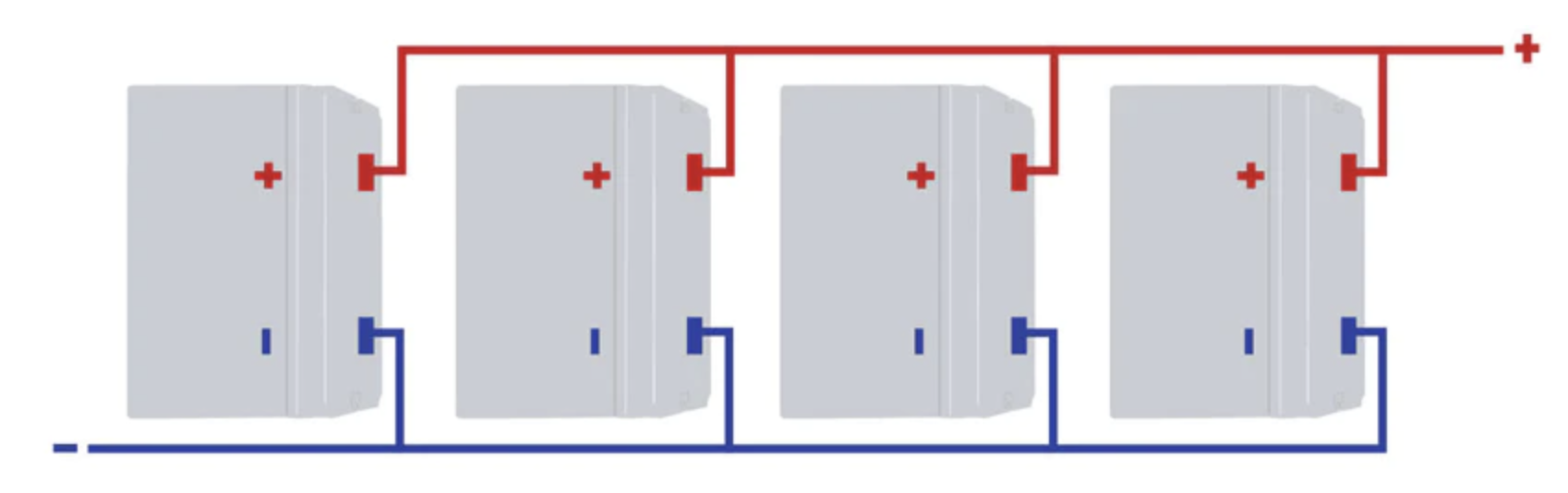
For example, if two batteries with a capacity of 1000mAh each are connected in parallel, the resulting battery bank will have a capacity of 2000mAh. This means that it can provide twice the run time compared to a single battery of 1000mAh.
Wiring batteries in parallel has several advantages, including:
- Increased capacity: Parallel connection increases the overall capacity of the battery bank, allowing for longer run times.
- Lower overall cost: Wiring batteries in parallel requires fewer batteries compared to a series connection, resulting in a lower overall cost.
- Higher current output: Parallel connection enhances the overall current capacity of the battery bank, making it suitable for applications that require high current draw.
However, there are a few considerations when wiring batteries in parallel:
- Balancing: Ensure all batteries have similar capacities and states of charge before connecting them in parallel. Significant imbalances can cause one battery to rapidly charge or discharge another, potentially damaging both.
- Charging: Charging a parallel-connected battery bank may require a charger with a higher current output to avoid extended charging times.
- Wire gauge: Use wire rated for the combined current capacity of the battery bank. Undersized wiring can overheat and create a fire hazard.
Always evaluate your application's specific voltage, capacity, and current requirements before wiring batteries in parallel. When in doubt, consult a qualified electrician.